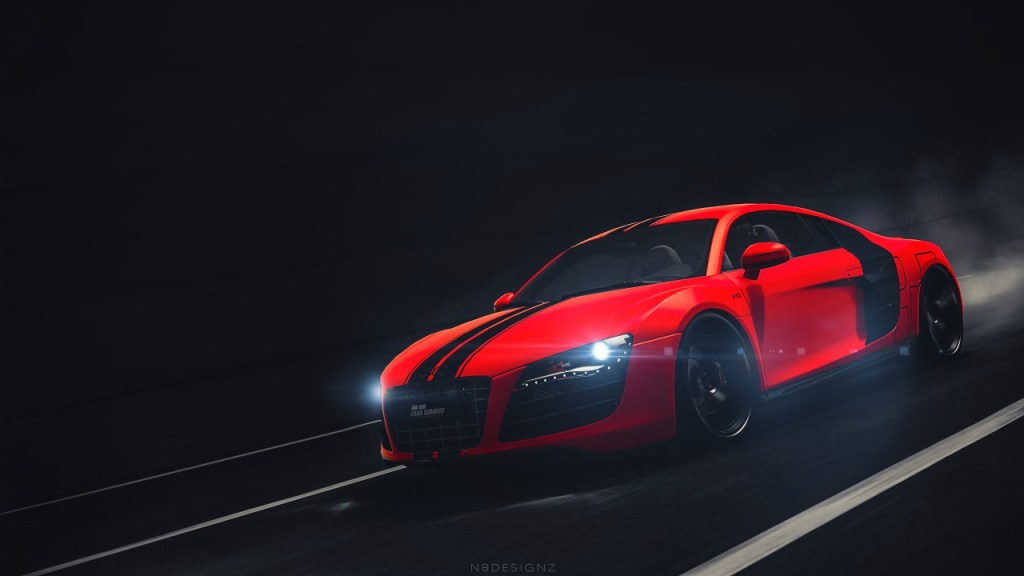
Porsche 987 Boxster – Aston Martin – Lamborghini wallpapers

(Bugatti) Bugatti Automobiles S.A.S. is a French high-performance luxury automobiles manufacturer and a subsidiary of Volkswagen AG, with its head office and assembly plant in Molsheim, Alsace, France. Volkswagen purchased the Bugatti trademark in June 1998 and incorporated Bugatti Automobiles S.A.S. in 1999.

Bugatti presented several concept cars between 1998 and 2000 before commencing development of its first production model, the Veyron 16.4, delivering the first Veyron to a customer in 2005. bugatti wallpapers, lamborghini, mclaren wallpapers, Bugatti wallpapers, jeep wallpapers

(Porsche 987)Boxster
The 987 was the second generation Boxster model, but remained very similar to the previous generation. The most obvious styling change is to the headlights, which now have a profile similar to those of the Carrera GT, Porsche’s mid-engined supercar. The intake vents on the sides of the Boxster are now larger, with more pronounced horizontal slats and are coloured metallic silver, irrespective of the paint colour on the rest of the car. The wheel arches have been enlarged to allow wheels up to 19 inches in diameter, a first for the Boxster series.

The most significant updates from the 986 series are in the interior, with a more prominent circular theme evident in the instrument cluster and cooling vents. Porsche claims that the 987 Boxster shares only 20% of its components with its predecessor. The base engine is a 2.7 L 176 kW (236 hp) flat-6, with the Boxster S getting a 3.2 L 206 kW (276 hp) engine. The Cayman 2-door fastback coup? is derived from the 987. Porsche 987 wallpapers#LamborghiniMurcielago #RangeRover #FordGT #Ford #AudiRS3
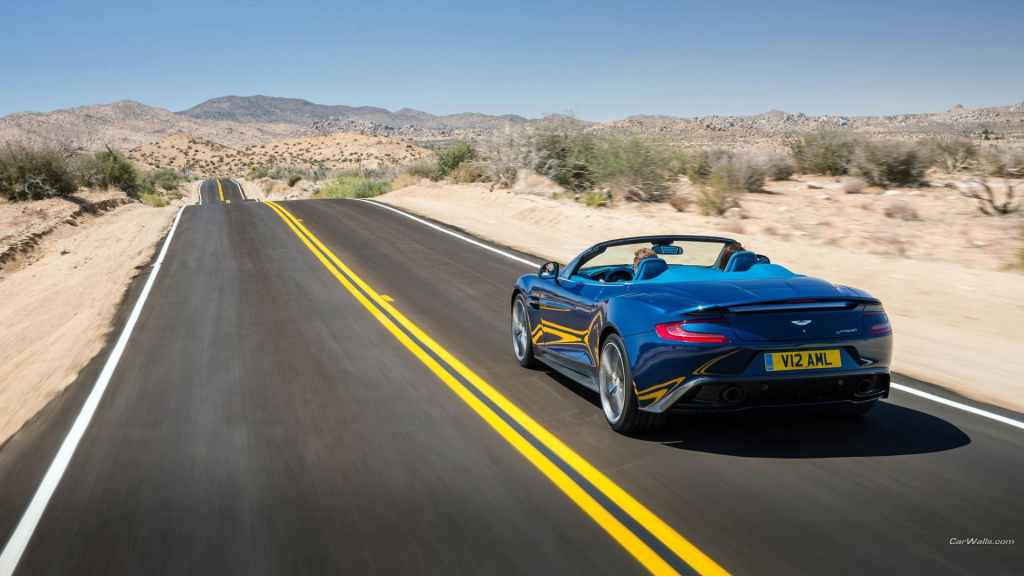
BMW 7 Series E38 Equipment – Aston Martin supercar wallpapers

Safety features include ASC+T traction control, headlight washers and auto-leveling low beam xenon HID headlamps. Side tubular airbags (called “Head Protection System”) were fitted as standard equipment. “Active Comfort Seats” were introduced in 1998, to improve comfort and reduce fatigue for the driver and front passenger. This system uses two fluid-filled bladders which alternate in height.

Other equipment includes Electronic Damper Control (called EDC III), power moonroof, rain-sensing wipers, dual zone climate control, electric drivers seat adjustment and electric steering wheel adjustment.

Double glazed windows were available (called “dual pane glass”). Break resistant laminated “security glass” was also available, which is known to delaminate. The delamination occurred with the Protection S357A option only, not with normal S352A dual pane windows. Bullet-resistant glass was used for the Protection model, with even thicker glass used for the Security model. bugatti wallpapers, supercars wallpaper, ford wallpapers, BMW 7 Series E38 wallpapers, bentley wallpapers

(Porsche 911)997 GT2 RS
On 4 May 2010, an RS variant was announced to German dealers in Leipzig. The GT2 RS develops 620 PS (456 kW; 612 hp) and 700 N?m (516 lb?ft) of torque and weighs 70 kg (150 lb) less than the standard GT2, allowing for a top speed of 330 km/h (205 mph) and the 0?100 km/h (0-62 mph) acceleration time of 3.4 seconds. Porsche 911 wallpapers#nissan #AudiRS3 #AudiQ7 #rollsroyce #AudiRS3

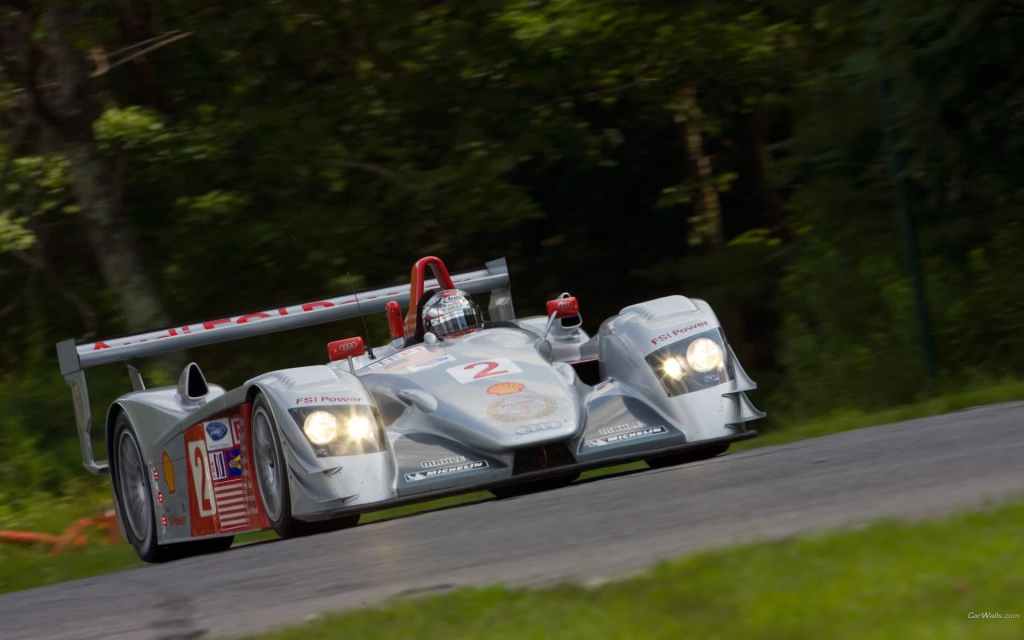
Audi A8 – racing car wallpapers

The Audi A8 (Typ 4D) was presented in February 1994 and debuted at the 1994 Geneva Auto Show in March, with full-scale factory production commencing in June 1994, although it was not until October 1996, for the 1997 model year that it became available in North America. Unlike its predecessor, the Audi V8 model, which was built on an existing steel platform, the A8 debuted on the then-new Volkswagen Group D2 platform, an all aluminium monocoque, marketed as the “Audi Space Frame” (ASF), which helped to reduce weight and preserve structural rigidity. The saloon/sedan was offered in both the A8 (standard wheelbase), and the A8 L extended or long-wheelbase (LWB) version. The A8 L adds 5 inches (127 mm) of rear legroom. Updates to the car in 1997 included the addition of six interior airbags. The A8 was designed as a competitor to fellow German rivals Mercedes Benz S Class and the BMW 7 Series. volvo wallpapers, car wallpaper, buick wallpapers, Audi A8 wallpapers, rolls royce wallpapers

(Pagani Zonda)PS
The Zonda PS was a one-off special that was commissioned by Peter Saywell. It was finished in white with yellow striping on the side. The car is the only one with all four exhaust pipes placed in a row instead of a square. In January 2013 pictures surfaced of a redesigned Zonda PS. The PS has now been finished in bright blue and has the same rear-fin, air intakes, roof scoop and spoiler resembling the ones present on the 760RS and 760LH, but the exhaust pipes arranged in a row have now been replaced with the original layout. It also features the same day-time LEDs as on the Tricolore, 760LH and the 760RS. A unique feature present on the car is that its front arches are fitted with carbon-fibre fenders for improved down-force. The car was involved in an accident in the UK in October 2017. Pagani Zonda wallpapers#Maserati #BmwX2 #Bentley #koenigsegg #AudiRS3

BMW 4 Series Second generation – Lamborghini Huracan – best sportscar wallpapers

BMW unveiled the Concept 4 at the 2019 Frankfurt Auto Show, which was 85 percent representative of the production version, and also form the basis of the all-electric BMW i4. Stylistically, the front is dominated by a large new interpretation of the kidney grille, featuring a more vertical design to distance it from the G20 3 Series. lambo wallpapers, lambo huracan, audi wallpapers, BMW 4 Series wallpapers, toyota wallpapers

(Nissan Skyline)The Porsche 959 was Nissan’s target when designing the GT-R. The chief engineer, Naganori Ito, intended to use the car for Group A racing, so the design specification was drawn up in conjunction with a copy of the Group A rules. The Nordschleife production car record at the time of development was 8’45” ? set by a Porsche 944. Nissan test driver Hiroyoshi Katoh reset the record with a time of 8’20”. Best Motoring managed 8’22″38.

The R32 GT-R dominated Japanese Touring Car Championship (JTCC), winning 29 races from 29 starts, taking the series title every year from 1989 to 1993. It took 50 races from 50 starts from 1991 to 1997 (latterly R33) in the N1 Super Taikyu. Nissan Skyline wallpapers#rollsroyce #FordGT #AudiA5 #PorscheCayman #AudiRS3

BMW 7 Series E38 L7 – latest Lamborghini wallpapers

From 1997 to 2001, BMW sold an extended wheelbase limousine model called the L7. The wheelbase was extended by 250 mm (9.8 in) over the “iL” models, resulting in an overall length of 5.37 m (211.4 in). Features included electrically adjustable rear seats, rear footrests, fold down rear trays, a fridge, rear television screen, video player and a fax machine.

Based on the 750iL with a 12-cylinder engine, the L7 has an electronically limited top speed of 250 km/h (155 mph). The L7 was only available in the Middle East, Southeast Asia and Europe, and 899 examples were built. The 2000-2001 models had an optional “privacy window” glass partition to separate the driver from the rear passengers. ferrari wallpapers, lamborghini wallpaper, bugatti wallpapers, BMW 7 Series E38 wallpapers, volvo wallpapers

(Porsche Carrera GT)The Carrera GT has large side inlets and air dams that help cool the large V10 engine framed by the carbon fibre rear bonnet. Fitted with Porsche’s latest Carbon fibre-reinforced Silicon Carbide (C/SiC) ceramic composite brake system, the 15-inch (380 mm) SGL Carbon disc brakes are fitted underneath the 19 inch front and 20 inch rear 5-spoke alloy wheels. Similar to other Porsche models, such as the 911, the GT includes an electronically operated rear wing which deploys at speeds above 113 km/h (70 mph).

The interior is trimmed in soft leather. Bose audio system and a navigation system were standard. In typical Porsche fashion, the ignition is present to the left of the steering wheel. This placement dates back to the early days of Le Mans racing when drivers were required to make a running start, hop into their cars, start them and begin the race. The placement of the ignition enabled the driver to start the car with the left hand and put it in gear with the right. Originally, the car had a beech wood gearknob, which pays homage to the wooden gearknob used in the Porsche 917 Le Mans race car. In its second year of production, a carbon fibre knob was also made available. Porsche Carrera GT wallpapers#DodgeChallenger #BmwM8 #BmwX5 #BmwM4 #AudiRS3

Audi A7 – best supersports cars – Lamborghini wallpaper

Audi announced the RS 7 Performance along with the RS 6 Performance on 22 October 2015. It is powered by the same 4.0-litre twin-turbo V8 engine as the standard RS 7, but now with 605 PS (445 kW; 597 hp) at 6,100-6,800 rpm and 750 N?m (553 lbf?ft) of torque at 2,500-5,500 rpm. The top speed remains limited to 250 km/h (155 mph) as standard, and there are optional Dynamic and Dynamic Plus packages that raise the top speed to 280 km/h (174 mph) and 305 km/h (190 mph) respectively. The RS 7 Performance will accelerate from 0 to 100 km/h (0 to 62 mph) in 3.7 seconds and 0 to 200 km/h (0 to 124 mph) in 12.1 seconds. Despite the improved performance, the fuel economy and CO
2 are unchanged from the standard RS 6 Avant. ferrari wallpapers, lamborghini, chevrolet wallpapers, Audi A7 wallpapers, ferrari wallpapers

(Porsche)Porsche’s 2002 introduction of the Cayenne also marked the unveiling of a new production facility in Leipzig, Saxony, which once accounted for nearly half of Porsche’s annual output. In 2004, production of the 456 kilowatts (620 PS; 612 bhp) Carrera GT commenced in Leipzig, and at EUR 450,000 ($440,000 in the United States) it was the most expensive production model Porsche ever built.

In mid-2006, after years of the Boxster (and later the Cayenne) as the best selling Porsche in North America, the 911 regained its position as Porsche’s best-seller in the region. The Cayenne and 911 have cycled as the top-selling model since. In Germany, the 911 outsells the Boxster/Cayman and Cayenne. Porsche wallpapers#LamborghiniHuracan #Nissan #RangeRover #PorscheCayenne #AudiRS3

BMW 5 Series E39 Chassis and body – best supercar wallpaper

Compared with its E34 predecessor, the E39 wheelbase grew by 68 mm (2.7 in) and overall length by 55 mm (2.2 in). Torsional rigidity was increased over the E34 by 40 percent, which reduces body flex and allows the suspension to operate more accurately, also improving ride quality. Due to a stiffer body shell, the weight of the chassis increased by 10 kg (22 lb), which is offset by the reduced weight of some aluminium suspension components.

Structural dynamics was also an objective of the body design, so the body’s frequencies for torsional twisting and bending are in separate ranges and above natural frequency. These frequencies are out of the range of engine and driveline vibrations, to avoid vibrations being amplified. mazda wallpapers, supercar wallpaper, ferrari wallpapers, BMW 5 Series E39 wallpapers, pagani wallpapers

(Nissan Skyline)R34
In May 1998, the HR34, ER34, ENR34, and BNR34 marked the introduction of the more fuel-efficient and environmentally-friendly RB25DET NEO engine. The RB20E engine was discontinued in the R34 base model (GT), and the RB20DE, after last being used in the R32 Skyline, was reintroduced in the updated NEO guise. The R34 GT, powered by the RB20DE NEO and coupled with a five-speed gearbox, became the most fuel-efficient straight-six Skyline to date (of any shape). The 4-speed automatic transmission available on some models was retained, and was upgraded with tiptronic-style manual controls. An export-market 25GT Turbo coupe variant (often abbreviated as GT-T) was sold in Singapore and Hong Kong from 1998 to 2000, while the facelift 25GT Turbo was sold in New Zealand between 2001 and 2002 alongside the GT-R V-Spec. These were the only three countries outside of Japan that sold the R34 25GT Turbo model Skylines new. All Japanese Nissan Prince Store locations that sold the Skyline were renamed Nissan Red Stage. Nissan Skyline wallpapers#AudiA8 #AudiA5 #AudiRS6 #mercedes #AudiRS3

Ford Fiesta- Limited Editions – supercars wallpaper – blue Audi

The Zetec S “Anniversary” was a limited edition of 400 cars based on the Zetec S and included a Radian Yellow body, chequered roof, black mirrors and door handles, tinted glass, 16 in (41 cm) alloy wheels, black roof spoiler, sports seats, leather trim, an alarm, and an iPod socket.

The car went on sale in the UK in March 2007 for ?12,595. Despite the name, the Ford Fiesta was 31 years old when the anniversary model was released.

The Zetec S “Celebration” was a limited (400 cars) edition based on the Zetec S and included a Celebration Green body, black and white chequered roof decal, unique identity number, chequered scuff plates and mats, full ‘Ebony Haze’ leather interior, privacy glass and Panther Black door mirrors, bodyside mouldings, roof spoiler, tailgate handle, 16 in (41 cm) alloy wheels, air conditioning, trip computer, electric windows, CD player with portable music connection socket, sports front seats and lowered sports suspension.

The car went on sale in the UK for ?12,595.

The Zetec S Red was a limited (500 cars) edition based on the Zetec S and included a Colorado Red body, black-and-white chequered roof decal, dark privacy glass on the rear windows, panther black door mirrors, door handles, bodyside mouldings, roof spoiler and tailgate handle; Quickclear heated front windscreen, ebony leather seats, 16 in (41 cm) alloy wheels, air conditioning and heated electrically operated door mirrors.

The car went on sale in the UK for ?13,000. volvo wallpapers, supercars, lotus wallpapers, Ford Fiesta wallpapers, bugatti wallpapers

(Ferrari F50)Wheels/tires/brakes
Wheels: magnesium alloy, manufactured by Speedline
Hubs: titanium
Brake disc bells/suspension uprights/brake calipers: aluminum
Upper and lower wishbones: black powder-coated steel
Front wheels: x
Front tires: 245/35ZR-18 Goodyear Eagle F1 GS Fiorano (35psi)
Front brakes: Brembo cross-drilled & ventilated cast iron discs, 4 piston aluminum Brembo calipers, Pagid brake pads, (without ABS)
Rear wheels: x
Rear tires: 335/30ZR-18 Goodyear Eagle F1 GS Fiorano (30psi)
Rear brakes: Brembo cross-drilled & ventilated cast iron discs, 4 piston aluminum Brembo calipers, Pagid brake pads, (without ABS)
Unsprung mass: 99 lb/121 lb (front corners/rear corners) Ferrari F50 wallpapers#AudiA6 #pagani #LamborghiniAventador #LamborghiniMiura #AudiRS3

Mercedes C Class- W203 – cool car wallpaper

In 1994, development began on the W203 C-Class. Design work commenced in mid-1994, with the final design being approved in December 1995 by the executive board. Design patents were filed on 20 April 1998 and 4 March 1999. Testing began in 1997, with development concluding in 2000. The second generation C-Class was introduced in March 2000. The sedan debuted with a range of inline-four and V6 petrol engines and inline-four and -five diesels, later W203’s received the V6 diesel. Most of the engines were carried over from the W202, but the C320 was exclusive, offering 160 kW (215 hp; 218 PS). The diesels now featured common rail direct fuel injection and variable geometry turbochargers. A six-speed manual gearbox was optional on some of the range, With exception to the C320 and C32 AMG. Notably (post 2005), for the first time, the number designations were no longer equivalent to the engine displacement, more specifically in the Mercedes C200 (1.8-litre), C240 (2.6-litre) and C200 CDI (2.2-litre). maserati wallpapers, car wallpaper, chevrolet wallpapers, Mercedes C Class wallpapers, rolls royce wallpapers

(Toyota Camry)Toyota Australia released the second generation Camry in April 1987. Local manufacture of the V20 had begun earlier in February at its recently acquired Australian Motor Industries facility at Port Melbourne, Victoria as a replacement for the Corona T140 and the Camry before it. Four-cylinder engine production and panel-stamping was undertaken at Toyota’s Altona, Victoria plant, all part of a model localization and factory upgrades investment totaling A$115 million. In fact, it was the first Camry made outside Japan, and is notable for being the most localized Toyota Australia product thus far with a lead time of less than six months, the shortest yet between start of Japanese and Australian manufacture. Higher levels of specification were fitted with the locally built 2.0-liter 3S-FE motor, but the imported 1.8-liter 1S-i unit distinguished base SE and CS cars. Both sedans and wagons were offered and either engine offered standard five-speed manual transmission, upgradeable to the four-speed automatic. Features standard at the base level SE comprised: AM/FM radio, centre console storage compartment, remote fuel filler release, intermittent windscreen wipers, digital clock. CS cars added a tilt steering column to which the CS-X adds a key lock warning system. The CS driver’s seat has front height adjustment; the CS-X’s front and rear height adjustment. The CS gets a two speaker AM/FM radio cassette player; the CS-X a four-speaker system and automatic electric antenna, plus central locking, variable intermittent wipers and center rear arm rest. The sedan-only Ultima grade gains power windows, cruise control, automatic transmission as standard, velour trim, and a nine-stage graphic equalizer for the audio system. A fleet-focused Executive pack based on the SE arrived in May 1988, adding automatic transmission, power steering, and air conditioning. In June 1988, the 2.5-liter V6 was introduced, being an imported fully optioned model from Japan sold in limited numbers and distinguished from local four-cylinder cars by its unique bumpers and trim. Coinciding with the August 1989 facelift, the 2.0-liter 3S-FC engine with carburetor superseded the imported 1.8. The updates brought minor adjustments inside and out, including improved suspension, steering, and headlights. In May 1991, Toyota made the fuel-injected 3S-FE version standard upon the carbureted engine’s deletion, and the CS trim level became CSi. Coinciding with this change, power steering became standard fitment and Toyota Australia refreshed badging, including the attachment of the new corporate logo consisting of three overlapping ellipses to form the letter “T”. With the May 1991 update, the Ultima models gained a CD player, the first Australian-built car to offer this. Towards the end of the series, special editions were released, starting with the Spirit of February 1991. Then in September 1992, value-added CSi Limited and Olympic Spirit cars came onto the scene. Australian production ended in late November 1992, in time for production of the XV10 to commence on 2 December. The Used Car Safety Ratings, published in 2008 by the Monash University Accident Research Centre, found that V20 Camry models provide an “average” (3/5 stars) level of occupant safety protection in the event of an accident. Toyota Camry wallpapers#Ferrari599 #Mazda #Bugatti #Pagani #AudiRS3

Ford Fiesta- The second generation – Lambo Veneno wallpaper

The second generation Fiesta featured a different dashboard on the lower-series trim levels compared to the more expensive variants. The XR2 model was thoroughly updated with a larger bodykit. It also featured a 96 bhp (72 kW) 1.6 L CVH engine as previously seen in the Ford Escort XR3, and five-speed gearbox (also standard on the 1.3 L CVH models), rather than the four-speed gearbox which had been used on the previous XR2 and on the rest of the Fiesta range. The engine was replaced by a lean-burn variant in 1986 which featured a revised cylinder head and carburettor; it was significantly cleaner from an environmental viewpoint but was slightly less powerful as a result (.008 bhp (0.0060 kW)).

A truly “hot” Fiesta was never produced by the factory to avoid impacting on sales of performance Ford Escort variants but many aftermarket conversions were available, the best-known being that by the English firm Turbo Technics boosting power to a well documented 125 bhp (93 kW), which easily outclassed its “standard” rivals. Ford appreciated the high quality of this conversion and was keen to look after its customers: the installation was undertaken by approved fitting centres and all the warranties remained valid after. ferrari wallpapers, lambo veneno, mclaren wallpapers, Ford Fiesta wallpapers, toyota wallpapers

(Mazda CX-3)Production version (2016?present)
The CX-3 is offered with an array of engines, such as a 1.5 L and 2.0 four cylinder gasoline engine, and a 1.5 L SkyActiv-D diesel engine. CX-3 sales began in the United States in the end of 2015 as a model for 2016. It replaced the similar Mazda2 subcompact in the market in North America.

Across the model lineup, power is provided by an updated (2018) 2.0 litre SkyActiv-G engine that develops 148 bhp (110 kW) and 148 lb-ft (201 Nm) of torque. It is connected to a six speed automatic transmission that can be paired to an optional all wheel drive system.

The entry level CX-3 Sport, Touring and Grand Touring all feature cruise control, power windows / lock and a 60/40 split folding rear seat. Other highlights include a rearview camera, Bluetooth connectivity, and a MAZDA CONNECT infotainment system with a seven inch display as standard equipment.

In Asia, the CX-3 is sold in countries such as Malaysia, Singapore, Thailand, Philippines and Indonesia, and was introduced progressively from 2016. Similarly, the CX-3 is offered with a 2.0 four cylinder gasoline engine or a 1.5 L SkyActiv-D diesel engine. Mazda CX-3 wallpapers#mitsubishi #Porsche918 #FordRaptor #bugatti #AudiRS3

Design a site like this with WordPress.com
Get started