On April 25, 2018, Ford announced that it planned to phase out all but one of its North American automobile models (the Mustang will be the sole surviving model) to focus primarily on trucks and SUVs. Ford had also planned to introduce an “Active” crossover version of the next-generation Focus, but canceled those plans due to tariff issues between the United States and China. aston martin wallpapers, supercars, lambo wallpapers, Ford wallpapers, bentley wallpapers
(Nissan 370Z)Transmissions All models (including the 2015 Nismo) include either a 7-speed automatic transmission with paddle shifters or a 6-speed manual transmission. SynchroRev Match system for 6-speed manual transmission is included with the Sport Package. Nissan 370Z wallpapers#Jeep #BugattiVeyron #Tesla #BmwX5 #AudiRS3
The Audi e-tron is based on the e-tron quattro concept that was unveiled at the 2015 Frankfurt Motor Show. The final production version was revealed in San Francisco on 17 September 2018, and it publicly debuted at the 2018 Paris Motor Show.
Scheduled for deliveries in Europe by December 2018, it got delayed to 2019 (customers reported expected delivery dates close to the end of 2019 – see the paragraph below); the car’s certification in Germany by the KBA (Federal Motor Transport Authority) was not obtained until required changes were made to the car’s software. In January of 2019, US market deliveries were due to commence in June. pagani wallpapers, supercars wallpaper, bugatti wallpapers, Audi E-Tron wallpapers, porsche wallpapers
(Porsche Cayman)All 986 and 987 Boxsters use the M96, a water-cooled, horizontally opposed (“flat”), six-cylinder engine. It was Porsche’s first water-cooled non-front engine. In the Boxster, it is placed mid-engine, while in the 911, rear-engine. The flat, mid-engine layout provides a low center of gravity, near-perfect weight distribution, and neutral handling. The engines had a number of failures, resulting in cracked or slipped cylinder liners, which were resolved by a minor redesign and better control of the casting process in late 1999. A failure for these early engines was a spate of porous engine blocks, as the manufacturer had difficulty in the casting process. In addition to causing problems with coolant and oil systems mingling fluids, it also resulted in Porsche’s decision to repair faulty engines by boring out the cast sleeves on the cylinders where defects were noted in production and inserting new sleeves rather than scrapping the engine block. Normally, the cylinder walls are cast at the same time as the rest of the engine, this being the reason for adopting the casting technology.
The model received a minor facelift in 2002. The plastic rear window was replaced by a smaller glass window. The interior received a glove compartment, new electro-mechanical hood and trunk release mechanism (with an electronic emergency release in the fuse box panel) and an updated steering wheel. Porsche installed a reworked exhaust pipe and air intake. In addition, the front headlight’s amber indicators were replaced with clear indicators. The rear light cluster was also changed with translucent grey turn signals replacing the amber ones. The side marker lights on the front wings were changed as well from amber to clear, except on American market cars where they remained amber. The bumpers were also changed slightly for a more defined, chiseled appearance, and new wheel designs were made available. Porsche Cayman wallpapers#Pontiac #Chevrolet #mitsubishi #AudiRS4 #AudiRS3
The 840Ci was offered with two different engine packages. The first used the 4.0-litre M60B40 V8 engine having a power output of 286 PS (210 kW; 282 hp) and was produced from mid-1993 to late 1995. From mid-1995, production phased in the newer 4.4-litre M62B44 V8 engine, which had better fuel economy and more torque, though power output remained unchanged.
The 840Ci was available with a 5-speed automatic transmission, though European cars were given the option of a 6-speed manual transmission. The only external features distinguishing the V8 model from the V12 models were the quad round exhausts, which were square in the V12 models. The 840Ci stayed in production until May 1999. dodge wallpapers, lamborghini, maserati wallpapers, BMW 8 Series wallpapers, rolls royce wallpapers
(Mitsubishi Pajero)In China, the second generation Pajero remains popular as it was involved in early joint ventures from the 1990s. Companies include Guangtong Motors, Jincheng Motors, Jinhui Motors, Sanjiu Motors, Sanxing Motors, Shanlu Motors and Wanli Motors.
Chinese car manufacturer Shanlu Motors made their version of the Pajero known as the CJY 6421D and was produced from 1997 to 2001 and came standard with the 4G64 engine. Beijing Automobile Works followed suit and produced their version known as the BJ2032 Tornado from 2002 to 2004. The BJ2032 came standard with a 2.2-litre engine sourced from General Motors paired to a 5 speed manual gearbox. The Tornado is 4880 millimetres long, 1830 millimetres wide, 1800 millimetres high and utilizes a 2750 millimetre wheelbase. Mitsubishi Pajero wallpapers#Bugatti #nissan #Porsche #AudiRS4 #AudiRS3
Bayerische Flugzeugwerke AG was formed in 1916. This company was renamed to Bayerische Motoren Werke (BMW) in 1922. However the name BMW dates back to 1913, when the original company to use the name BMW was born (initially as Rapp Motorenwerke). BMW’s first product was a straight-six aircraft engine called the BMW IIIa. Following the end of World War I, BMW remained in business by producing motorcycle engines, farm equipment, household items and railway brakes. The company produced its first motorcycle, the BMW R 32 in 1923. nissan wallpapers, lamborghini wallpaper, lambo wallpapers, BMW wallpapers, lambo wallpapers
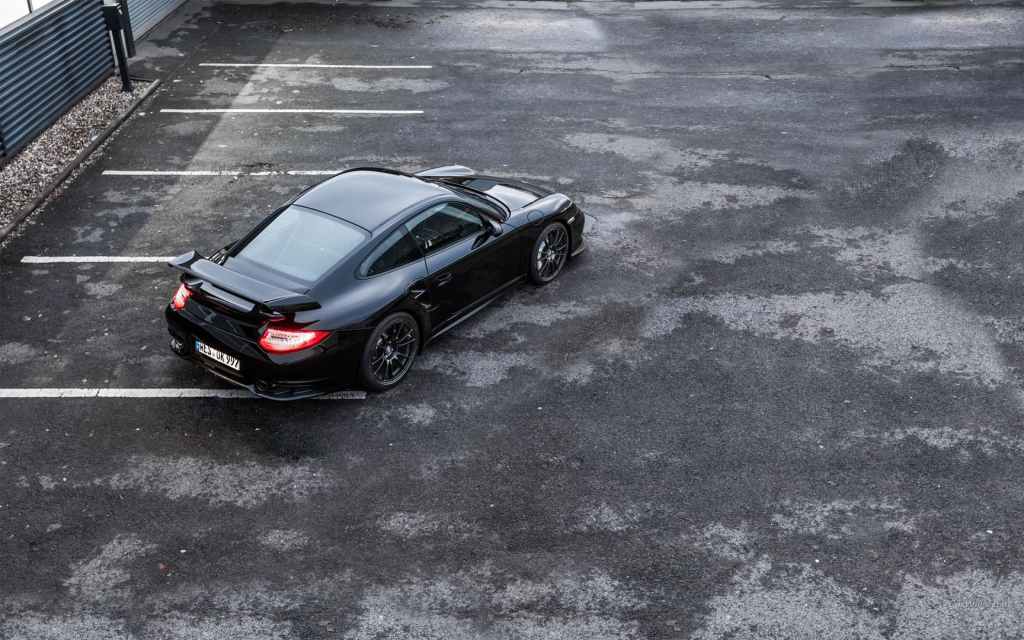
(Porsche 911)As with the 996 Turbo, the car featured distinctive styling cues over the Carrera models including front LED driving/parking/indicator lights mounted on a horizontal bar across the air intakes. The traditional rear wing is a variation of the 996 bi-plane unit.
A new 911 Turbo S was set for production in 2010. It is a fully optioned Porsche 911 Turbo with a PDK gearbox and sports exhaust as standard. It also comes with re engineered turbo chargers to give an extra 30 horsepower increase to a total of 523 PS (385 kW; 516 hp). Porsche 911 wallpapers#Mustang #Ferrari612 #mazda #subaru #AudiRS3
Walter R?hrl with his Quattro A2 during the 1984 Rally Portugal In 1980, Audi released the Quattro, a four-wheel drive (4WD) turbocharged car that went on to win rallies and races worldwide. It is considered one of the most significant rally cars of all time, because it was one of the first to take advantage of the then-recently changed rules which allowed the use of four-wheel drive in competition racing. Many critics doubted the viability of four-wheel drive racers, thinking them to be too heavy and complex, yet the Quattro was to become a successful car. Leading its first rally it went off the road, however the rally world had been served notice 4WD was the future. The Quattro went on to achieve much success in the World Rally Championship. It won the 1983 (Hannu Mikkola) and the 1984 (Stig Blomqvist) drivers’ titles, and brought Audi the manufacturers’ title in 1982 and 1984. koenigsegg wallpapers, lambo aventador, ford wallpapers, Audi wallpapers, buick wallpapers
(Nissan Juke)First generation (F15; 2010?2019) Design The Juke was designed at Nissan Design Europe in London and refined at Nissan’s Design Centre in Japan. It is based on the Nissan B platform. Nissan Juke wallpapers#FordMustang #LamborghiniMurcielago #Toyota #LamborghiniHuracan #AudiRS3
Ford was heavily involved in Formula One for many years and supplied engines to a large number of teams from 1967 until 2004. These engines were designed and manufactured by Cosworth, the racing division that was owned by Ford from 1998 to 2004. Ford-badged engines won 176 Grands Prix between 1967 and 2003 for teams such as Team Lotus and McLaren. Ford entered Formula One as a constructor in 2000 under the Jaguar Racing name, after buying the Stewart Grand Prix team which had been its primary ‘works’ team in the series since 1997. Jaguar achieved little success in Formula One, and after a turbulent five seasons, Ford withdrew from the category after the 2004 season, selling both Jaguar Racing (which became Red Bull Racing) and Cosworth (to Gerald Forsythe and Kevin Kalkhoven). jeep wallpapers, car wallpaper, audi wallpapers, Ford wallpapers, nissan wallpapers
(Mazda)SkyActiv Technology SkyActiv technology is an umbrella name for a range of technologies used in certain new Mazda vehicles. These vehicles include the Mazda2/Demio, Mazda6/Atenza, CX-5 and 2014 Mazda 3. Together these technologies increase fuel economy to a level similar to a hybrid drivetrain. Engine output is increased and emission levels are reduced. These technologies include high compression ratio gasoline engines (13.0 to 1), reduced compression diesel engines (14.0 to 1) with new 2-stage turbocharger design, highly efficient automatic transmissions, lighter weight manual transmissions, lightweight body designs and electric power steering. It is also possible to combine these technologies with a hybrid drivetrain for even greater fuel economy. Mazda wallpapers#porsche #Mustang #audi #FordGT #AudiRS3
In addition to the conventional SUV body style, Audi will release a ‘Sportback’ version with a sloping rear part of the roof, similar to the BMW X6 and the Mercedes-Benz GLE Coupe. It is noteworthy that Audi decided to compete with these ICE-powered rivals by offering only a pure electric vehicle.
Comparisons to the styling of Audi’s own A7 have also been made.
The production version debuted at AutoMobility LA in Los Angeles in November 2019. The exterior dimensions are identical except for height, as its roofline is 5 cm (2 in) lower than the standard model. This, and a drag coefficient lower that in the standard model (0.25 vs. 0.27) allow for longer highway range, as the powertrain and battery are the same as in the original model.
Cargo space measured by European standards is reduced from 660 l (23.3 cu ft) to 615 l (21.7 cu ft). American sources, however, measure cargo space in a different way and indicate that the original e-tron has as much as 821 l (29.0 cu ft) of cargo space, so the reduction to 615 l (21.7 cu ft) is substantial.
It will be available in Europe in the spring of 2020. mazda wallpapers, supercars, rolls royce wallpapers, Audi E-Tron wallpapers, volvo wallpapers
(Ferrari LaFerrari)Equipment The car is equipped with carbon-ceramic Brembo brake discs at the front (398 mm) and rear (380 mm), The car is equipped with Pirelli P Zero Corsa tyres measuring 265/30 R 19 (front) and 345/30 R 20 (rear) respectively.
The car uses a carbon fibre monocoque structure designed by Ferrari’s F1 technical director Rory Byrne, with a claimed 27 percent more torsional rigidity and 22 percent more beam stiffness than its predecessor. It has a double wishbone suspension in the front and a multi-link suspension in the rear.
LaFerrari has a number of electronic controls including an electronic stability control, high performance ABS/EBD (anti-lock braking system/electronic brake distribution), EF1-Trac F1 electronic traction control integrated with the hybrid system, E-Diff 3 third generation electronic differential, SCM-E Frs magnetorheological damping with twin solenoids (Al-Ni tube), and active aerodynamics, which are controlled by 21 of LaFerrari’s onboard computers, to enable maximum performance. The body computer system is developed by Magneti Marelli Automotive Lighting. Ferrari LaFerrari wallpapers#LamborghiniMiura #Koenigsegg #PaganiZonda #MazdaRX8 #AudiRS3
The M8 was originally envisioned as a Ferrari competitor equipped with a special 558 PS (410 kW; 550 hp) version of the S70 engine, which was essentially a bored out version of the M70 with 4-valve per cylinder heads. A common misconception is that this engine powered the McLaren F1. The S70/2 used in the McLaren F1 was not based directly on the prototype 4-valve V12 used in the M8, and was a completely new design.
The project was eventually scrapped because BMW decided that there was no market for a high performance variant of the 8 Series primarily because of the on-going economic recession of the 1990s. The only prototype ever produced (one that was reportedly not even safe for normal road usage) was locked away by BMW in the company’s Giftschrank (poison storage). BMW and the M Division had strongly denied that the car was even a possibility since the initial stages of its development. A world exclusive feature in the February 2010 issue of BMW Car Magazine, however, revealed that the M8 prototype still exists in its entirety. The car was unveiled to journalists for the first time on July 2, 2010 at the BMW Museum in Munich. The only public showing of the car happened on August 17, 2012 during ‘The Legends of the Autobahn’ car show held in Carmel, California. The car was specially shipped from Germany for the appearance.
Although the M8 was never produced, the 850CSi was also tuned by BMW’s M division. Aside from sporting an M-tuned engine (as identified by the S prefix instead of the M prefix that a non-M tuned engine would bear), the car’s VIN identifies the car as being built by BMW Motorsport (a WBS prefix) instead of BMW AG (WBA prefix). Per BMW’s own protocol, the 850CSi as marketed was essentially a de-tuned version of the putative M8. mercedes wallpapers, supercars wallpaper, ford wallpapers, BMW 8 Series wallpapers, mazda wallpapers
(Porsche 991)The 3.8-litre twin-turbocharged flat-six engine as used on the GT2 RS is untouched and generates 700 PS (515 kW; 690 hp). Power is sent to the rear wheels via a 7-speed dual clutch transmission with dual mass flywheel. The car retains ABS and Porsche Electronic Stability Management System including a full defeat mode. Unlike most racing cars air conditioning is standard-equipment. A passenger seat as well as a Martini sponsor-livery inspired by the original 935/78 are available as an option.
Production for the track-only car aimed at clubsport events and private training on racetracks has been announced as limited to 77 examples, with deliveries starting in June 2019. Porsche 991 wallpapers#AudiRS4 #Lambo #Dodge #MazdaRX8 #AudiRS3
From 1961 to 1979, Ford offered several Special option packages for the F-Series, typically designed for owners with specific uses for their vehicles. For 1961, the Camper Special option package was introduced; designed for owners of slide-in truck campers, the option package featured pre-wiring for the camper, heavy-duty transmission and engine cooling, and a larger alternator. For 1968, Ford introduced the Contractor’s Special, and Farm and Ranch Special, which featured toolboxes and heavier-duty suspension. The Explorer Special was introduced as a lower-priced variant of the Ranger trim. The “Trailer Special” was offered as well with trailer brake, heavy-duty radiator, transmission cooler, and tow hitch.
In 1980, the Special option packages were withdrawn as part of the F-Series redesign, while a number of features continued as stand-alone options; the Explorer continued as a variant of the Ranger trim through the 1986 model year. mazda wallpapers, super car, audi wallpapers, Ford F Series wallpapers, audi wallpapers
(Toyota Corolla)Ninth generation (E120, E130; 2000) In August 2000, the E120 ninth-generation Corolla was introduced in Japan, with edgier styling and more technology to bring the nameplate into the 21st century. This version was sold in Japan, Australasia, Europe and the Middle East. Toyota Corolla wallpapers#AudiRS3 #Volvo #FerrariRoma #FerrariRoma #AudiRS3
The facelifted version of the Vito began from September 2010, and features restyled front and rear lights, restyled front bumpers, and more-efficient diesel engines adapted from the Mercedes-Benz Sprinter range. The Vito’s suspension, instrumentation, steering wheel, and overall quality of materials was also improved.
Early models included Vito 110 CDI, Vito 113 CDI, Vito 116 CDI, Vito 122 CDI, Vito 126, with 3 body lengths (compact, long, extra-long). koenigsegg wallpapers, supercar wallpaper, bentley wallpapers, Mercedes Vito wallpapers, maserati wallpapers
(Nissan Silvia)240RS This generation saw the introduction of the Nissan 240RS (BS110), a coupe fitted with the 2.4-liter DOHC FJ24 engine. The 240RS was built between 1983 and 1985, its production extending the end of the S110 itself. The resulting machine became Nissan’s official rally car in the World Rally Championship from 1983 to 1985, with its best result a second place finish in the 1983 New Zealand Rally. Nissan Silvia wallpapers#FerrariFF #AstonMartin #volvo #BmwM4 #AudiRS3




 Car Wallpapers