The California was launched at the October 2008 Paris Motor Show. When introduced, the California represented a new fourth model range for Ferrari. The new model range (front-engine, eight cylinder grand touring sports car) joined the then current models: the mid-engine eight cylinder sports car, the front-engine twelve cylinder sports car, and the front-engine twelve cylinder grand touring car.
Design
The California represented a radical new design by Pininfarina S.p.A. and was developed under the oversight of Ken Okuyama. The model was primarily intended to attract new Ferrari owners. The car’s grand touring personality was emphasized with a slightly higher ride height compared to its more aggressive siblings. The chassis was designed and manufactured by Ferrari division Carrozzeria Scaglietti. Overall, it is considered a landmark car for Ferrari in that it represents a number of concepts being used for the first time in their road cars:
The first front engined Ferrari with a V8
The first to feature a 7-speed dual-clutch transmission
The first hard top convertible with a folding metal roof
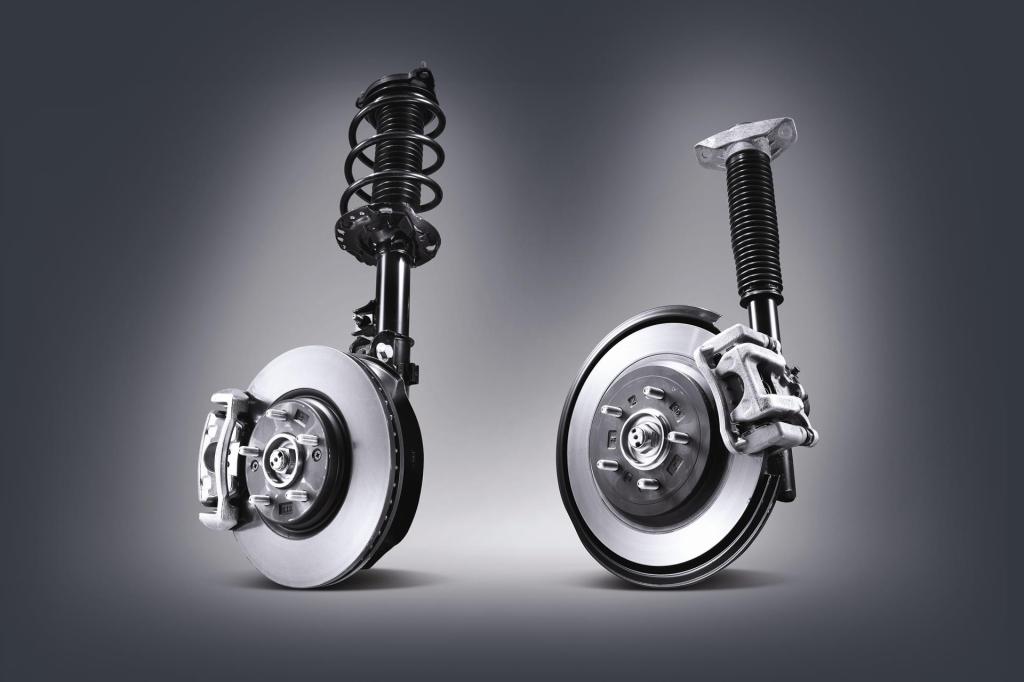
The first with multi-link rear suspension
The first with direct petrol injection
The engine displaces 4,297 cubic centimetres (262.2 cubic inches), and used a gasoline direct injection system produced by Bosch. It generates a maximum power output of 338 kW (460 PS; 453 hp) at 7,750 rpm; its maximum torque produced is 485 N?m (358 lbf?ft) at 5,000 rpm. The resulting 79 kW (106 hp) per litre of engine displacement is extremely high for a naturally aspirated engine, as other manufacturers have used forced induction to reach similar power levels. The engine makes use of a wet sump designed lubrication system. The body computer system was developed by Magneti Marelli Automotive Lighting.
The California’s mid-front engine layout and rear gear box configuration create a 47% front to 53% rear weight distribution. bmw wallpapers, ferrari, lamborghini wallpapers, Ferrari California wallpapers, pagani wallpapers
(Toyota Supra)The Group-A MA70 Supra had varying degrees of success in various fields such as Rally and 24HR, but is most known for its participation in the Japanese Touring Car Championship (JTCC). In the JTCC, the Supra did not win as many races as intended, which is primarily judged on the fact it was underdeveloped and its placement in a higher tier division under regulations because of the 3.0-litre engine displacement, imposing the Toyota with the performance inhibition of running with a higher curb weight and less power compared to the rest of its class. Both the TOM’S and SARD teams fared well in results in the (JTCC) with the TOM’S team winning on its debut in 1987, before abruptly ending their (JTCC) career with the MA70 Group-A in 1989. Upon its initial Australian Touring Car Championship (ATCC) debut in 1989, the Group-A Supra failed to finish its first race. With DNF’s becoming a regular upset owing to the lack of power and heavy weight of the Supra, it began to strike doubt in the car’s capability of success in the (ATCC) which suffered increasingly due to constant rules and regulation changes issuing a red-faced outcome against its main rivals like the Ford Sierra Cosworth RS500, Nissan Skyline HR31 GTS-R and the BMW M3 (E30) which were lighter, more powerful, and had smaller displacement engines. Hopes would further diminish for Toyota in the top division by the introduction of the domineering Nissan Skyline GT-R (R32) in the (JTCC) in 1989 and the Australian Touring Car Championship (ATCC) in 1990. Toyota in 1991 would switch to racing the Corolla Levin instead in the lower tier divisions, while many privateer teams soldiered on with the Supra until the Group A racing’s final demise in 1993. It is said that than a handful of Group-A MA70’s remain in existence after being returned to Japan to be destroyed once the Group-A racing ended. One of those known to be intact was retained by an original driver and privateer of the (ATCC) John Smith in Australia, which still sees track time and limelight at car shows today.
Only eleven MA70 Group-A cars were built by TRD Japan for homologation racing. A few out of many special developed parts that were fitted to the various Group-A race cars happen to include a cast magnesium nine litre oil pan with matching high flow oil pump, 288 camshafts with 10.88mm lift, Hollinger close proportion 5-speed gear-set in the R154 case, Harrop 4 piston brake calipers with 15.5 ? (393 mm) rotors, and TRD-sourced torque-vectoring mechanical limited-slip differential with 50:50 left:right lockup on full throttle. TRD was also responsible for the thick rear-anti squat tram-rods which were integral to the multi-link rear suspension setup to control rear squat under hard acceleration and launching. Toyota Supra wallpapers#BmwM8 #Porsche997 #Pontiac #Buick #AudiRS3
 Car Wallpapers